
Rigid, Stress-Relieved Frames
Welded and annealed steel beds with machined rails keep positioning stable at 100 m/min traverse, so accuracy holds after thousands of cutting hours — not just on day one.
1.5kW to 30kW cutting systems, tube cutters, laser welders, marking stations and robotic special purpose machines — engineered, assembled and commissioned by our own team.
Marvel Industrial Solution designs, assembles and commissions metal processing machinery from its facility in Ahmedabad, Gujarat, India. Every frame is stress-relieved and machined in-house, every electrical cabinet is wired to a documented schematic, and every machine is run-tested with customer sample parts before dispatch.
Because our engineers work on both cutting machines and robotic special purpose machines, we look at a buyer's problem as a complete process — material handling in, cutting or welding, marking for traceability, and finishing out — instead of selling one isolated machine.
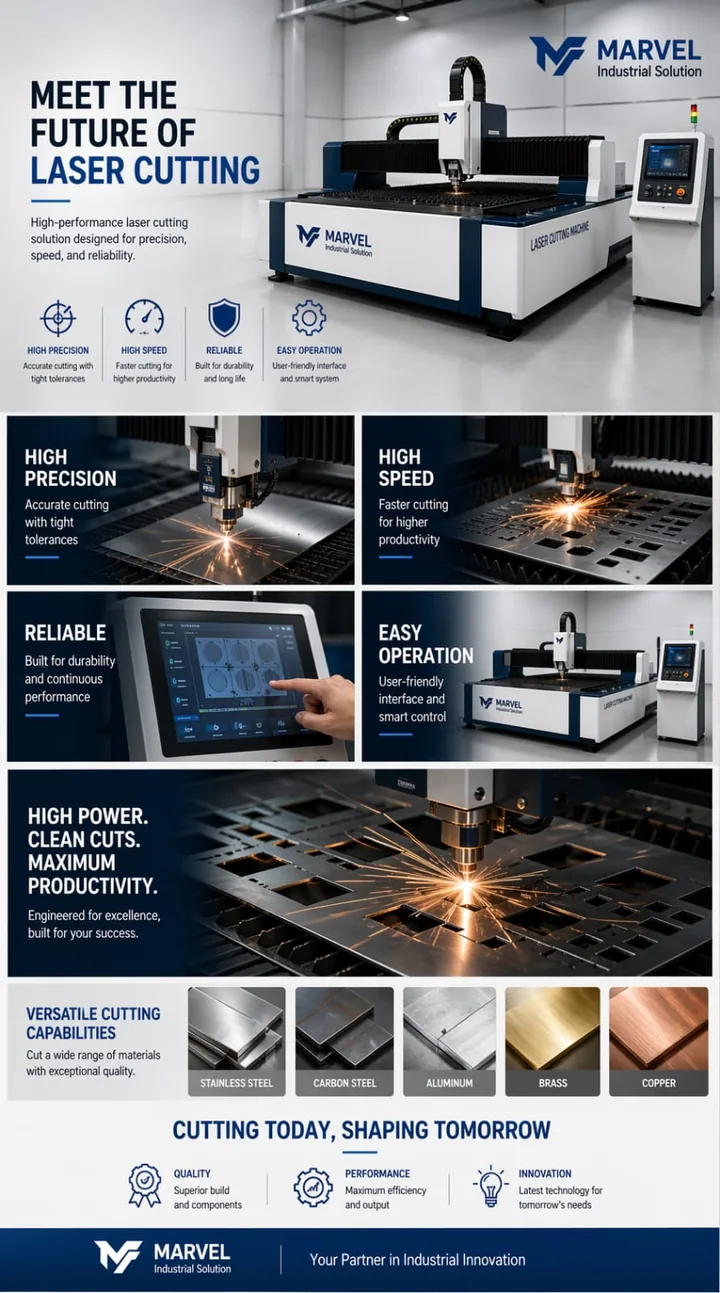
What overseas buyers and fabrication managers tell us actually matters once the quotation stage is over.
Welded and annealed steel beds with machined rails keep positioning stable at 100 m/min traverse, so accuracy holds after thousands of cutting hours — not just on day one.
We size the machine from your material mix and thickest regular plate, not from a catalogue upsell. That keeps gas consumption, kerf quality and cost per part under control.
Cutting, welding, marking, polishing and robotic transfer are engineered by one team, so interlocks, safety logic and cycle times are aligned across the whole cell.
Class-1 enclosures on request, emergency stop circuits, fume extraction interfaces and laser safety interlocks specified for industrial audit requirements.
Sea-worthy packing, packing list, electrical schematics, spare parts catalogue and pre-shipment video testing so your freight and customs process stays predictable.
Commissioning engineers, operator and nesting-software training, parameter tuning and remote diagnostics with recommended first-year spares to avoid long downtime.
Twelve production-proven platforms covering sheet cutting, tube cutting, welding, industrial marking and robotic automation. Each page carries working envelopes, power options and material capability.
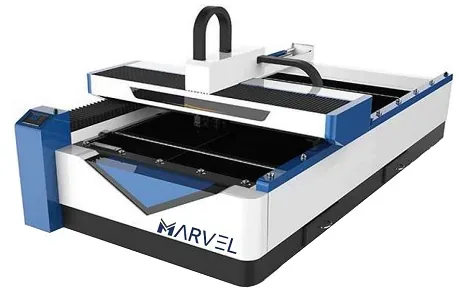
Fixed-bed CNC cutter for job shops and general fabrication. Cuts stainless, mild steel, aluminium, brass and copper with repeatable edge quality.
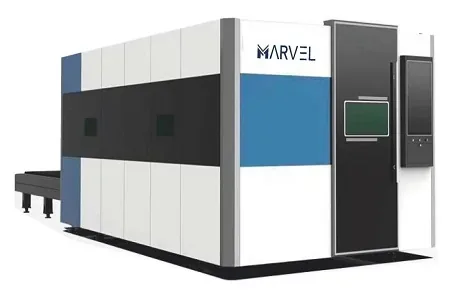
High-power platform for structural steel, heavy plate and large-format panels where long beds and thick-section capability drive the business case.
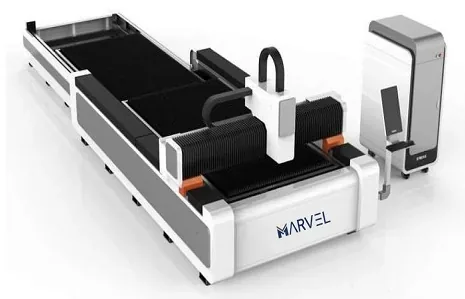
Dual pallet shuttle lets one sheet be cut while the next is loaded — the fastest way to add shift output without adding a second machine.
Chuck-driven tube and profile cutter for round, square and rectangular sections — slots, holes, copes and end profiles in one clamped operation.
Coil-fed line with decoiler and straightener for blanking from coil. Removes sheet shearing, reduces scrap and enables lights-out batch running.
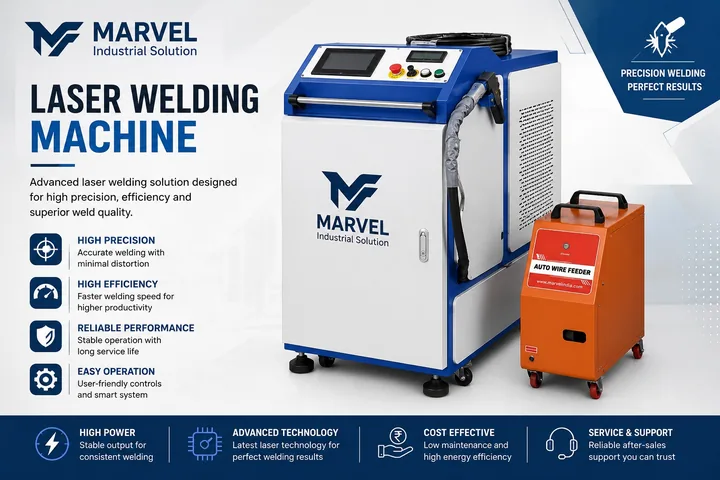
Wobble-head handheld welder producing narrow, low-distortion seams on stainless, mild steel and aluminium — with far less grinding afterwards.
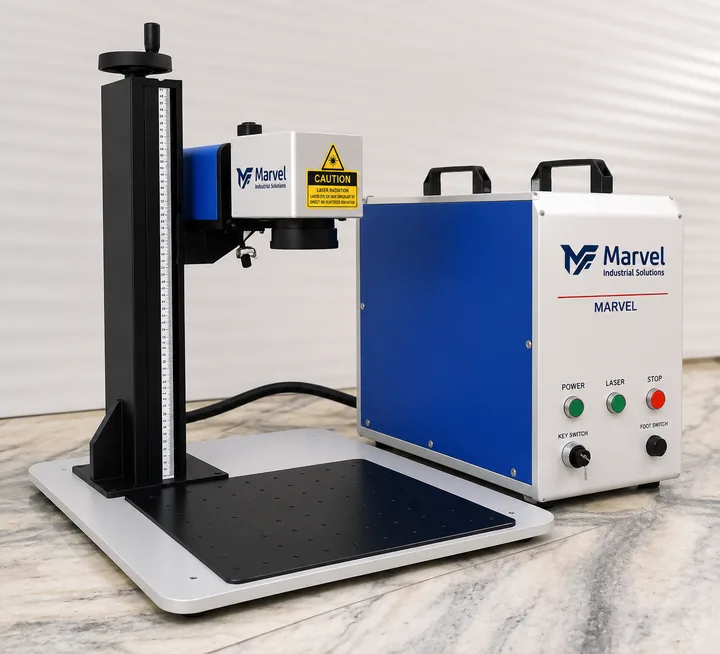
Compact fiber marker for permanent logos, serial numbers, data matrix and batch codes on metals and engineering plastics.
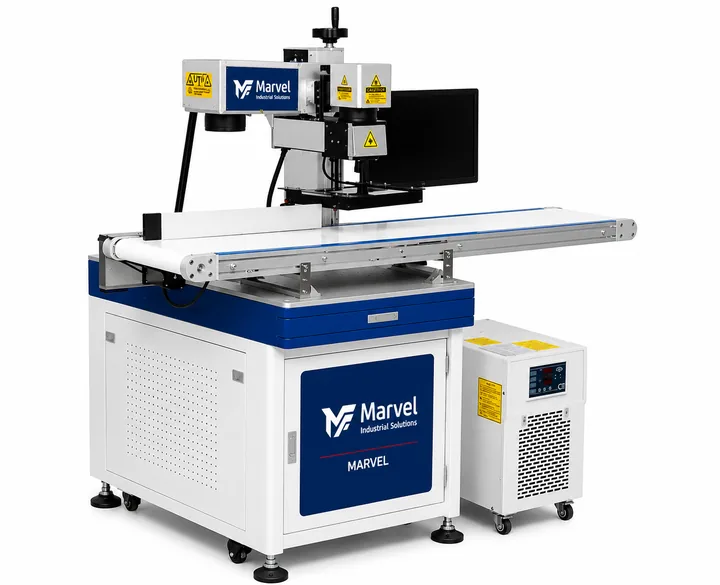
Camera-guided marking that locates each part automatically — ideal for mixed trays, irregular fixtures and code verification workflows.
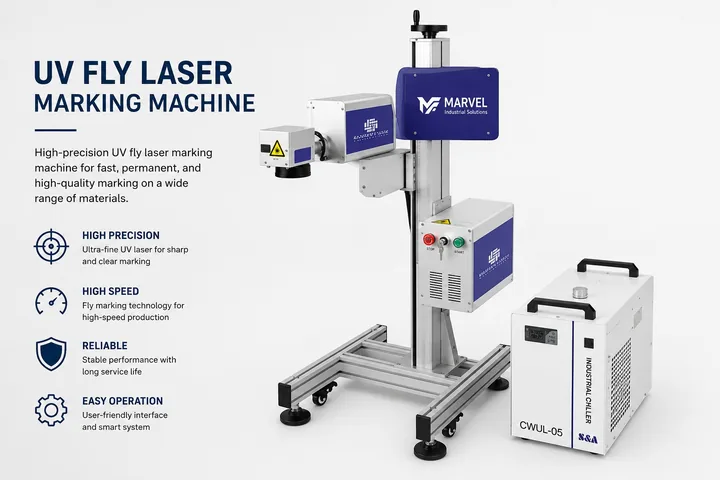
Cold-marking UV source for on-the-fly coding of films, cables, glass and heat-sensitive packaging without ink or consumables.
Programmable polishing and buffing SPM that replaces manual finishing, holding a consistent surface finish across every shift.
Servo gantry pick-and-place for loading, unloading and part transfer between machines — built around your part weight and cycle target.
Press-to-press transfer automation that removes operator hands from the die area while raising strokes per hour on multi-stage lines.
Indicative production values our engineers use when sizing a machine. Quality-cut thickness (clean, dross-controlled edge) is always lower than absolute separation thickness — we quote the first, not the second.
| Laser Power | Mild Steel (O₂) | Stainless Steel (N₂) | Aluminium (N₂) | Best-Fit Application |
|---|---|---|---|---|
| 1.5 kW | up to 8 mm | up to 3 mm | up to 3 mm | Signage, light enclosures, thin-sheet job work |
| 3 kW | up to 16 mm | up to 8 mm | up to 6 mm | General fabrication, panels, furniture, ducting |
| 6 kW | up to 22 mm | up to 14 mm | up to 12 mm | Automotive components, mid-volume production |
| 12 kW | up to 30 mm | up to 25 mm | up to 20 mm | Structural work, plate parts, fast thin-sheet output |
| 20-30 kW | up to 40 mm | up to 35 mm | up to 30 mm | Heavy engineering, shipbuilding, pressure parts |
Need a machine sized for your part mix? Share thickness range, monthly tonnage and shift pattern — our engineers reply with a power recommendation and nesting estimate.
A transparent four-stage route that keeps technical, commercial and logistics decisions in the right order.
You share drawings, material grades, thickness range and target cycle time. We map the process and flag anything that will affect quality or cost.
Power, bed size, automation level and options are specified with a layout sketch, utility list and an honest throughput expectation.
In-house assembly, alignment, parameter development and sample cutting or welding of your parts, with test reports and video before dispatch.
Foundation guidance, commissioning, operator plus programming training, and a documented spares and service plan for the long run.
Applications we have engineered for, each with its own tolerance, finish and traceability expectations.
“The 3 kW machine was installed on the promised date and the operator training covered nesting, not just buttons. Edge quality on 6 mm stainless needed no deburring.”
Fabrication Workshop OwnerGujarat, India“Their team simulated our press transfer cycle before quoting. The robot hit the agreed strokes per hour and removed a real safety risk from the die area.”
Plant Engineering HeadAutomotive Component Manufacturer“We needed permanent data matrix marking for customer traceability. The vision marking setup they proposed reads first-time-right on every tray.”
Quality & Procurement LeadMetal Processing IndustryShare material, thickness, part drawing, monthly volume and cycle-time target. Our engineering team responds with the right machine platform, power class and automation level for your floor — plus what it will realistically produce per shift.
Answers written by our application engineers, based on machines already running in production.
Match power to your thickest regular production material, not the occasional maximum. 1.5-2 kW suits up to 6 mm mild steel and 3 mm stainless. 3-4 kW handles 12-16 mm mild steel and 8 mm stainless economically. 6 kW is the practical starting point for 20 mm plate, while 12-30 kW targets 25-40 mm plate and very fast thin-sheet output using nitrogen bright cutting.
A single table machine cuts on one fixed bed, so loading and unloading happen while the laser head waits. An exchange (dual pallet) table shuttles two beds, so one sheet is cut while the next is loaded — typically recovering 20-35% more beam-on time per shift. Above roughly six hours of daily cutting, or in nested job-shop work with frequent sheet changes, the exchange table usually pays back the price difference quickly.
Yes. The 1064 nm fiber wavelength is absorbed far better by reflective metals than a CO₂ beam. With back-reflection protection in the laser source and correct cutting-head optics, our machines process aluminium, brass, copper, galvanised steel and titanium alongside mild and stainless steel. We confirm parameters on your actual material before shipment.
Electricity, assist gas and consumables. A 3 kW system typically draws 11-14 kW total including chiller and extraction. Oxygen is used for thick mild steel; nitrogen gives oxide-free stainless and aluminium edges but costs more per hour. Consumables are limited to nozzles, protective windows and ceramic rings — there are no lamps, mirrors or laser gas to replace as with CO₂ systems.
Yes. Every machine ships with foundation and utility drawings, sea-worthy packing, commissioning support, trial cutting of customer samples, operator and CAM nesting training, and a documented spare parts list. Remote diagnostics and video-assisted troubleshooting are available for overseas installations, together with recommended first-year and second-year spares kits.
That is core work for us. Auto metal polishing systems, gantry robot loaders, stamping press transfer robots and material handling lines are engineered from your part drawings, cycle-time target and available floor space. The route covers concept layout, simulation, build, factory acceptance testing and on-site integration with your existing presses or machines.
We select the marking source by substrate and read requirement. Fiber markers give deep permanent marks on metals; vision-assisted markers locate irregular parts and verify code readability; UV fly markers code films, cables, glass and heat-sensitive packaging without ink. Where serial data comes from an ERP or MES, the marking software is configured to pull variable data automatically.
A quick reference to the technologies, materials and production problems covered by the Marvel Industrial Solution machine range.