Choosing a Single Table Fiber Laser Cutting Machine is not simply a matter of selecting the highest wattage. It requires a close look at materials, sheet sizes, production volume, floor space, and operator skill. A compact workshop may need a 3 kW system for stainless steel and carbon steel. A busy fabrication plant may require 6 kW or more. Higher power can improve throughput, but it can also increase investment, energy use, and maintenance demands.
David Belforte, a respected laser industry analyst, offers a useful principle: “Match the laser to the application, not the application to the laser.” This idea should guide every purchasing decision. Ask how often the machine will cut thick plate. Check its working area against your most common sheets. Inspect the cutting head, fiber source, motion system, nesting software, and fume extraction design. Small details matter. A rigid bed can reduce vibration during long cuts. Automatic nozzle changing can save minutes throughout a shift. Reliable technical support can prevent a minor fault from becoming a costly stoppage.
There is no perfect machine for every factory. That is easy to forget. Some buyers focus too heavily on speed claims. Others overlook training, spare parts, or installation conditions. Compare real cutting samples, not only brochures. Request references from companies processing similar materials. Review warranty terms carefully. A well-chosen Single Table Fiber Laser Cutting Machine should deliver stable quality, practical operating costs, and room for sensible growth. It may not be the fastest option available. It should be the one your team can use consistently, safely, and profitably.
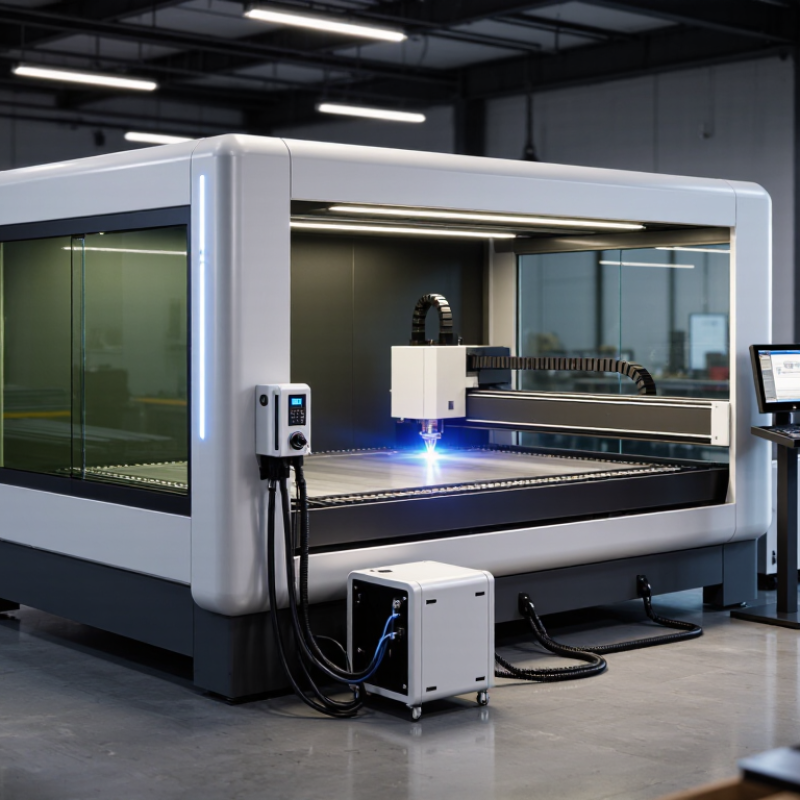
Choosing a single table fiber laser cutter starts with its purpose, not its advertised power. Define the work envelope, daily quantity, required tolerance, and maximum sheet size. World Steel Association’s World Steel in Figures 2024 recorded about 1.89 billion tonnes of crude steel production in 2023. The USGS Mineral Commodity Summaries 2024 estimated global primary aluminum production at roughly 70 million metric tons. These figures show why material planning matters. Steel, aluminum, stainless steel, and brass react differently to heat, reflection, and assist gases.
Too vague.
List every target material and thickness range before comparing machines. For thin stainless sheet, edge quality and heat control may matter more than maximum wattage. For thicker carbon steel, penetration, cutting speed, and gas consumption become stronger priorities. A single-table design also requires careful checking of loading space and part-removal access. ISO 9013 classifies thermal-cut edge quality, giving buyers a practical reference for evaluating finished parts. I have seen specifications focus on speed while ignoring warping and small-hole accuracy. That assumption can be costly. Review sample cuts using your actual material, especially reflective metals. A smaller machine may be the better choice when production is moderate and floor space is limited.
| Typical Purpose | Common Materials | Typical Material Thickness | Recommended Laser Power | Suitable Working Area | Assist Gas | Key Machine Requirements | Selection Notes |
|---|---|---|---|---|---|---|---|
| Thin-sheet fabrication and signage | Mild steel, stainless steel, aluminum, galvanized steel | 0.5–3 mm | 1–2 kW | Approximately 1,500 × 3,000 mm | Nitrogen for stainless steel and aluminum; oxygen for mild steel | High positioning accuracy, stable beam delivery, automatic focus, and a fine-cutting nozzle | A lower-power system is generally sufficient when production is focused on thin sheets and detailed contours. |
| General metal fabrication | Mild steel, stainless steel, aluminum, brass, and copper | 1–8 mm | 2–4 kW | Approximately 1,500 × 3,000 mm or 2,000 × 4,000 mm | Oxygen for mild steel; nitrogen or air for stainless steel and non-ferrous metals | Automatic gas regulation, capacitive height sensing, efficient fume extraction, and a rigid single table | This range provides a practical balance between cutting versatility, operating cost, and machine investment. |
| Medium-thickness structural parts | Mild steel, stainless steel, aluminum | 6–16 mm | 4–8 kW | Approximately 2,000 × 4,000 mm or 2,000 × 6,000 mm | Oxygen for carbon steel; high-pressure nitrogen for stainless steel and aluminum | High-power laser source, robust cutting head, effective heat management, and strong slat support | Higher power can improve throughput, but gas consumption, electrical demand, and thermal management also increase. |
| Heavy carbon-steel component cutting | Mild steel and low-alloy structural steel | 12–25 mm | 6–12 kW | Approximately 2,000 × 4,000 mm or larger | Oxygen | High-capacity chiller, reinforced frame, reliable autofocus, thick-plate cutting parameters, and suitable fume extraction | Confirm the actual maximum thickness with material grade, edge-quality requirements, and the selected cutting head. |
| Non-ferrous metal processing | Aluminum, brass, copper, and other reflective metals | 0.8–8 mm | 2–6 kW | Approximately 1,500 × 3,000 mm or 2,000 × 4,000 mm | Nitrogen or clean, dry compressed air | Back-reflection protection, an appropriate optical configuration, stable gas pressure, and precise height control | Reflective materials require equipment specifically configured for safe and stable processing. |
| High-volume contract cutting | Mixed mild steel, stainless steel, and aluminum sheet | 0.8–12 mm | 4–8 kW | Approximately 2,000 × 4,000 mm or 2,000 × 6,000 mm | Oxygen, nitrogen, or air according to material and edge-quality requirements | Fast piercing, automatic nesting support, high acceleration, dependable motion control, and efficient scrap removal | Prioritize uptime, consumable availability, service access, and operating cost rather than rated power alone. |
| Prototype, repair, and small-batch work | Thin and medium carbon steel, stainless steel, and aluminum | 0.5–6 mm | 1–3 kW | Approximately 1,500 × 3,000 mm | Compressed air for economical cutting; nitrogen or oxygen when required by finish | Compact footprint, simple programming, easy setup, low maintenance, and flexible material handling | A single-table design can be cost-effective when loading frequency is moderate and continuous two-table production is unnecessary. |
| Precision components and decorative parts | Stainless steel, mild steel, aluminum, brass | 0.5–4 mm | 1–3 kW | Approximately 1,500 × 3,000 mm | Nitrogen or clean, dry air | Low vibration, accurate linear drives, fine focal control, stable material support, and quality inspection capability | For thin precision work, beam quality, motion stability, and process control may matter more than maximum power. |
Measure your largest regular sheet, then add room for clamps, edges, and loading movement. A tight table creates delays. Leave space for future work, but avoid paying for unused steel.
A rigid welded bed supports stable cutting and better dimensional accuracy. Ask how the frame was stress-relieved and inspected. Vibration can mark corners. Peak speed alone proves little.
Check front, side, and rear loading options. Measure door swing, pallet paths, aisle space, and scrap-bin locations. Reach the nozzle, slats, filters, and cabinet without awkward stretching. Small problems become daily delays.
Clear menus, stable motion control, and quick parameter access reduce setup mistakes. Useful features include edge finding, nozzle centering, and alarm messages. Simple is better. But overly simple controls may hide diagnostics.
Choose automation that matches your workload. Automatic focusing, height sensing, nesting, and piercing control can shorten preparation. Sensors need cleaning and calibration. A neglected sensor may repeat errors quickly.
Check floor space, electrical capacity, ventilation, compressed-air quality, and training needs. Confirm the table fits your common sheet sizes. Operators should understand alarms, lens care, consumables, and emergency procedures.
Look for enclosed work areas, interlocked doors, fume extraction, and accessible emergency controls. Inspect grounding and cable protection. Never assume a clean appearance proves safe operation. Housekeeping still matters.
Record filter changes, cleaning time, consumables, electricity, labor, service, and downtime. Include the chiller, extraction unit, compressor, and standby power. Estimates are imperfect. Test real parts before final approval.
A trial can reveal glare, noise, software delays, awkward access, and actual cutting accuracy. Use your materials and usual thicknesses. Save measured results with the cost model. Sample photographs are not enough.
Choosing the right Single Table Fiber Laser Cutting Machine begins with clearly defining your production goals and material requirements. Consider the types and thicknesses of metal you plan to process, then compare laser power, cutting capacity, and processing speed to ensure the machine can meet both current and future workloads. Table dimensions, structural stability, and workspace accessibility are also important, as they influence material handling, cutting accuracy, and overall efficiency.
A practical evaluation should include the control system, automation functions, software compatibility, and operator requirements. Safety features, routine maintenance, energy consumption, and the total cost of ownership should also be reviewed before making a decision. The best machine is not always the most powerful option; it is the one that provides a suitable balance of performance, usability, reliability, operating cost, and long-term value for your specific manufacturing needs.